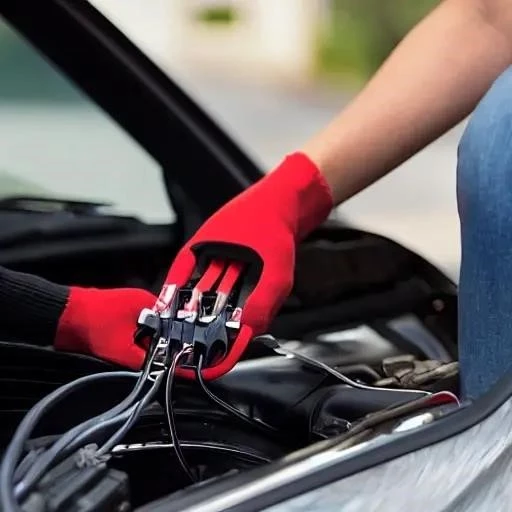
The heart-stopping moment arrives without warning: a turn of the key, only to be met by the disheartening silence of a dead car battery. It’s a universal experience, an instant plunge from smooth sailing into an abyss of inconvenience and frustration. For countless drivers, this scenario often conjures images of endless waiting for roadside assistance, disrupting meticulously planned schedules and injecting unexpected stress into an otherwise ordinary day; Yet, what if this common automotive vexation could be transformed into an empowering opportunity, a chance to reclaim control and confidently navigate life’s inevitable detours?
Indeed, the feeling of vulnerability when your vehicle refuses to spring to life is profoundly unsettling, leaving many feeling utterly stranded and beholden to external help. However, there exists a remarkably straightforward, time-tested solution that has rescued generations of motorists from the clutches of immobility: the humble, yet incredibly effective, art of jump-starting a car. Mastering this essential roadside skill not only provides an immediate remedy to a drained battery but also instills an invaluable sense of self-reliance, transforming a potential crisis into a mere temporary setback, enabling you to continue your journey with renewed assurance.
| Category | Details |
|---|---|
| Essential Equipment | A set of quality jumper cables (preferably 10-20 feet long with heavy-gauge wire), a donor vehicle with a healthy 12-volt battery, and ideally, safety gloves and eye protection. |
| Safety First Checklist | Always ensure both vehicles are turned off, parking brakes engaged, and in park/neutral. Keep metal objects away from battery terminals. Avoid touching the cables’ clamps together once connected to batteries. |
| Quick Steps Overview | Connect positive (+) to positive (+), then negative (-) to a grounded metal surface on the dead car, and finally negative (-) to the donor car’s negative terminal. Start the donor, then the dead car. Disconnect in reverse order. |
| When NOT to Jump Start | Do not attempt if the battery is leaking, swollen, or visibly damaged. Avoid if vehicles have different voltages (e.g., 6V vs. 12V) or if one car is electric/hybrid without consulting its manual; |
| Reference Link | AAA: How to Jump-Start a Car |
Understanding the Automotive “Lifeblood”
While the immediate cause of a vehicle’s refusal to start is often a depleted battery, understanding the underlying mechanisms provides a deeper appreciation for this crucial maneuver. Automotive experts frequently highlight common culprits, ranging from leaving headlights on overnight – a surprisingly frequent oversight – to parasitic drains from accessories, or simply the natural degradation of a battery over its typical lifespan of three to five years. By integrating insights from seasoned mechanics and roadside assistance professionals, we discern that a timely jump start acts not merely as a temporary fix but as a critical intervention, allowing the alternator to recharge the battery and restore the vehicle’s electrical equilibrium, thereby preventing more extensive complications and ensuring continued operational viability.
The Art of Connection: A Step-by-Step Guide
Before embarking on this vital procedure, careful preparation is paramount, akin to a surgeon meticulously readying for an operation. First, gather your essential equipment: a reliable set of jumper cables and a willing donor vehicle, ideally with a fully charged 12-volt battery. Both cars must be turned off, with parking brakes firmly engaged, and transmissions in park (for automatics) or neutral (for manuals), ensuring absolute stability and preventing any accidental movement. This meticulous setup, often overlooked in moments of urgency, significantly mitigates risks, ensuring a smooth and successful revival of your immobilized vehicle.
The connection process, while seemingly intricate, follows a logical and safety-driven sequence. Begin by attaching one red (positive, +) clamp to the positive terminal of the dead battery. Next, securely fasten the other red clamp to the positive terminal of the donor car’s battery. Then, connect one black (negative, -) clamp to the negative terminal of the donor vehicle. Crucially, attach the remaining black clamp not to the dead battery’s negative terminal, but to an unpainted metal surface on the dead car’s engine block or frame, away from the battery itself. This grounding technique is a critical safety measure, expertly designed to dissipate any residual sparks safely, preventing potential ignition of hydrogen gas that might be emanating from the battery, a testament to prudent automotive engineering.
Once all connections are firmly established, initiate the donor vehicle’s engine and allow it to run for several minutes, providing a steady charge to the depleted battery. Subsequently, attempt to start the car with the dead battery. If it roars to life, celebrate your triumph! Keep both engines running for at least 15-20 minutes to allow the revived battery to gain a sufficient charge, thereby ensuring it can sustain itself once disconnected. Disconnecting the cables requires reversing the sequence precisely: remove the negative clamp from the dead car’s ground, then the negative from the donor, followed by the positive from the donor, and finally, the positive from the newly revived car. This methodical approach minimizes electrical surges and safeguards both vehicle’s sophisticated electronic systems, embodying a best practice championed by leading automotive service providers.
Beyond the Jump Start: Future-Proofing Your Journey
While the ability to jump-start a car is an incredibly empowering skill, it’s also a valuable diagnostic indicator. A recurring need for a jump start suggests deeper issues, prompting prudent drivers to seek professional inspection of their battery, alternator, or charging system. Looking ahead, the automotive landscape is constantly evolving, with innovations like smart battery chargers, portable jump starters – compact devices that eliminate the need for a second vehicle – and advanced vehicle diagnostics becoming increasingly prevalent. These technological marvels promise even greater convenience and autonomy for drivers, yet the fundamental knowledge of how to perform a traditional jump start remains an indispensable cornerstone of automotive literacy, a timeless skill for navigating the unpredictable journey of life on the open road.
Ultimately, mastering the art of how to jump-start a car transcends mere mechanical instruction; it represents a profound embrace of preparedness and self-reliance. It’s about more than just getting your vehicle moving again; it’s about empowering yourself to overcome minor crises with calm competence, transforming potential roadside nightmares into fleeting inconveniences. So, arm yourself with this vital knowledge, keep a quality set of cables handy, and drive forward with the unwavering confidence that you are ready for whatever the road ahead may bring, truly embracing the spirit of the open highway.