My Deep Dive into Green Thumb Industries (GTI) as an Investment
After decades navigating the intricate currents of the market, spotting truly promising opportunities amidst the ceaseless noise and hype is a skill honed through experience. Green Thumb Industries (GTI) is a name that has consistently surfaced in my discussions and research, especially as the American cannabis industry has begun to mature. I’ve personally spent a considerable amount of time peeling back the layers of this multi-state operator (MSO), analyzing its operations, financials, and strategic moves. Today, I want to share my unvarnished perspective on whether GTI warrants a place in your investment portfolio.
Understanding GTI’s Business Model and Market Position
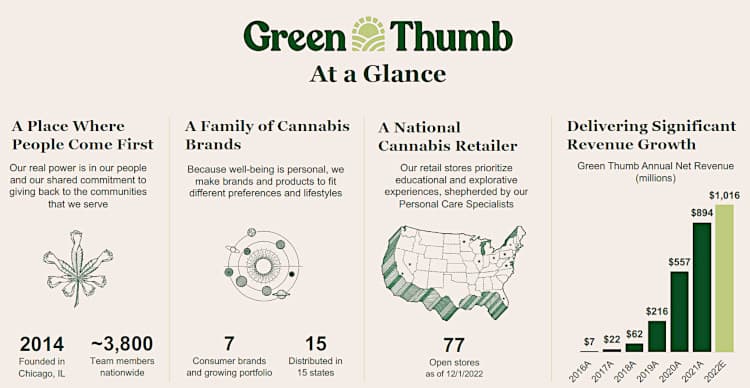
When I first started looking seriously at the cannabis sector, many companies were all flash and no substance. GTI, however, always stood out due to its disciplined approach to growth and a clear focus on the consumer. They are a vertically integrated MSO, meaning they cultivate, process, and retail their own products across multiple states. This vertical integration, when executed well, provides greater control over the supply chain, quality, and ultimately, margins. I’ve seen countless MSOs struggle with fragmented operations, but GTI has methodically built a formidable presence. They operate under a strong brand portfolio, including their Rise dispensaries and popular CPG brands like Rythm, Dogwalkers, and incredibles. Their strategy isn’t just about being in many states; it’s about establishing strong, profitable positions within those states, often targeting limited license markets where competition is managed. This focus on core markets, unlike some rivals who spread themselves too thin, has been a cornerstone of their relative success.
Navigating the Regulatory Landscape and Growth Catalysts
For any cannabis investor, the regulatory landscape is both the biggest hurdle and the most significant growth catalyst. We’ve all watched discussions around federal legalization or rescheduling—like the potential shift from Schedule I—create significant volatility. My experience has shown me that betting solely on political action can be a dangerous game; these reforms are often delayed, diluted, or fail to materialize as initially hoped. I’ve seen portfolios skyrocket and plummet based on congressional whispers. GTI, to its credit, has crafted a strategy to thrive *despite* federal prohibition. They’ve built strong, compliant operations at the state level, accumulating valuable licenses and market share. This robust state-by-state foundation means that while federal reform would undoubtedly be a boon, their business isn’t entirely reliant on it. The ongoing expansion of medical and adult-use programs in individual states, even without federal action, continues to provide organic growth opportunities. For example, when a state like New York or New Jersey transitions to adult-use, companies with existing medical infrastructure, like GTI, are uniquely positioned to capitalize rapidly.
Financial Health and Valuation: What the Numbers Tell Me
Ultimately, a compelling story must be backed by solid numbers. I’ve always emphasized looking beyond revenue growth and diving deep into profitability and cash flow. In the early days of the cannabis boom, many companies burned through cash at an alarming rate. With GTI, I’ve observed a consistent drive toward sustainable profitability. Their adjusted EBITDA has shown steady improvement, indicating operational efficiency gains. However, it’s crucial to understand the impact of Section 280E of the IRS tax code, which disallows standard business deductions for companies dealing in Schedule I or II controlled substances. This significantly inflates their effective tax rate and suppresses GAAP net income. When I analyze GTI, I look closely at their gross margins and operating expenses *before* the 280E hit, as that gives a clearer picture of their underlying business performance. Their balance sheet is also a critical consideration. While growth companies often carry debt, I scrutinize the interest rates and repayment schedules. GTI has managed to access capital without excessive dilution, which is a testament to investor confidence and their improving financial metrics. Comparing their valuation multiples (EV/EBITDA, P/S) to other MSOs and even mature CPG companies, I try to gauge if the market is accurately pricing in their growth trajectory versus the inherent sector risks.

Risks and Long-Term Outlook
No investment is without risk, and the cannabis sector carries its own unique set. Competition, both from licensed operators and the enduring illicit market, is fierce. Regulatory setbacks, changing consumer preferences, and potential commoditization of certain product categories are all factors I consider. For GTI specifically, a key risk is the continued burden of 280E; while they manage it, any sustained delay in federal reform keeps a significant drag on their bottom line. Another concern is potential shareholder dilution; while they’ve been relatively disciplined, rapid expansion often requires capital, which can sometimes come at the expense of existing shareholders. My long-term outlook for GTI, and the sector at large, is cautiously optimistic. Assuming continued state-level expansion, a slow but steady path toward federal clarity (even if it’s just rescheduling), and GTI’s demonstrated operational excellence, I believe there’s still significant upside. However, investors must be prepared for volatility and understand that this is not a "set it and forget it" investment.
Key Learnings and Pro Tips from My Experience:
- Look Beyond the Hype: Don’t get swept up by news headlines or social media buzz. Always dig into the financial statements and critically assess the management team’s track record.
- Understand the Regulatory Chess Game: Federal legalization isn’t a silver bullet; it could bring new challenges alongside opportunities, such as increased competition from large tobacco or alcohol players. Invest in companies that can thrive *today*.
- Assess Management’s Execution: GTI has demonstrated discipline and operational excellence in a chaotic and unpredictable market. Execution matters infinitely more than grand visions or ambitious press releases.
- Consider Your Own Risk Tolerance: Cannabis remains a high-risk, high-reward sector. Only allocate capital that you are prepared to lose, and ensure it’s a fitting part of your diversified portfolio.
- Focus on Sustainable Cash Flow and Profitability: Companies that can self-fund their growth without constant shareholder dilution or excessive debt are truly valuable. Cash flow generation is paramount.
- Diversify Within the Sector (If You Invest): If you choose to invest in cannabis, avoid putting all your eggs in one MSO basket. Spreading your investment across a few strong players can mitigate company-specific risks.
Common Mistakes to Avoid:
- Investing Solely on Speculative Federal Legalization: This "tomorrow" story has burned many investors. Focus on companies with solid fundamentals that can perform under current regulations.
- Ignoring 280E Tax Implications: This isn’t just a nuance; it’s a massive drag on profitability and cash flow. Failing to factor it into your analysis leads to overoptimistic projections.
- Chasing "Hot" Tips Without Due Diligence: The cannabis sector has been fertile ground for pump-and-dump schemes. Always do your own thorough research.
- Overlooking Shareholder Dilution Risk: Many cannabis companies fund growth by issuing new shares, which can significantly erode the value of your existing holdings. Track share count rigorously.
- Underestimating Competition: As markets mature, competition intensifies, potentially squeezing margins and making it harder for all players to grow simultaneously.
- Failing to Differentiate Between MSOs: Not all multi-state operators are created equal. Their balance sheets, brand strength, management capabilities, and regional focus vary wildly.
FAQ Section
Is GTI Profitable Right Now?
GTI has consistently demonstrated positive adjusted EBITDA, indicating strong operational profitability before certain non-cash items and the punitive 280E tax. However, under GAAP (Generally Accepted Accounting Principles), their net income can still be impacted by 280E, making them appear less profitable than they fundamentally are. When evaluating profitability, I focus on their ability to generate positive operating cash flow and their adjusted EBITDA metrics, which reflect the underlying business health more accurately in this unique regulatory environment.
What are the biggest risks specific to GTI?
Beyond the general sector risks, GTI faces specific challenges. One is the ongoing federal prohibition and the resulting 280E tax burden, which significantly eats into their potential net profits. Another is intense competition, both from other well-funded MSOs and the persistent illicit market, which can pressure pricing and market share. Regulatory changes at the state level, such as license caps or new entrants, could also impact their established market positions. Finally, like any rapidly growing company, there’s always the execution risk—can they maintain their operational discipline and expand effectively without overstretching resources or diluting shareholder value too much?
How does GTI compare to other MSOs like Trulieve or Curaleaf?
While all are multi-state operators, they each have distinct profiles. Trulieve Cannabis Corp. (TRUL) has historically been known for its dominant market share in Florida, focusing heavily on that single, high-volume state before expanding more broadly. Curaleaf Holdings (CURA) tends to have a wider geographical footprint, often prioritizing market entry and scale across numerous states. GTI, in my view, has pursued a more balanced strategy, prioritizing depth in key profitable markets with limited licenses and emphasizing strong brand development and operational efficiency. Each MSO has different debt levels, regional strengths, and management philosophies, requiring individual analysis rather than a blanket comparison. It’s never an "either/or" but rather an understanding of their unique competitive advantages and financial health.